Web Content Extraction Pipelines for AI Training Data Curation
Deliberate curation at each pipeline stage determines what knowledge models can actually learn.
Web content extraction pipelines for AI training require quality engineering. Every decision about what to fetch, preserve, reject, and transform shapes what a model can learn. Building a high-signal corpus means measuring how each choice in the pipeline affects the data, because more web content alone does not make better training data.
Why the pipeline is the model: how curation choices shape what gets learned
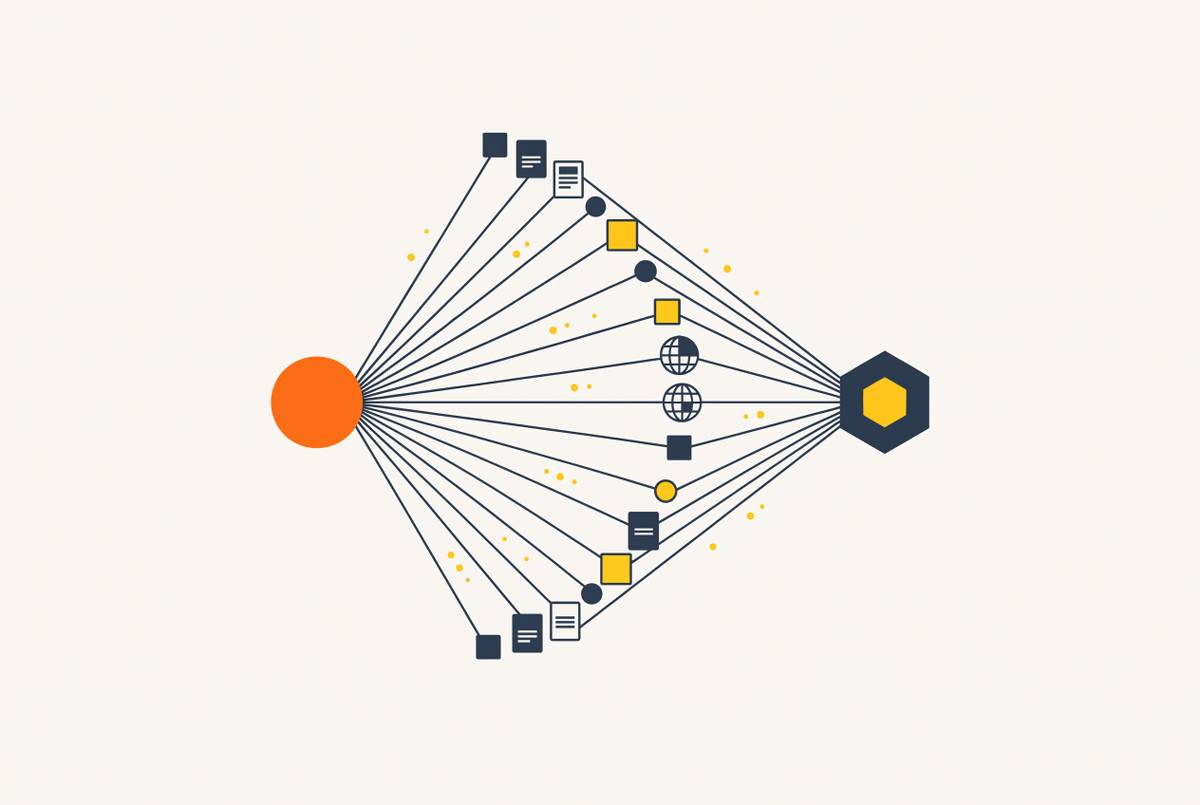
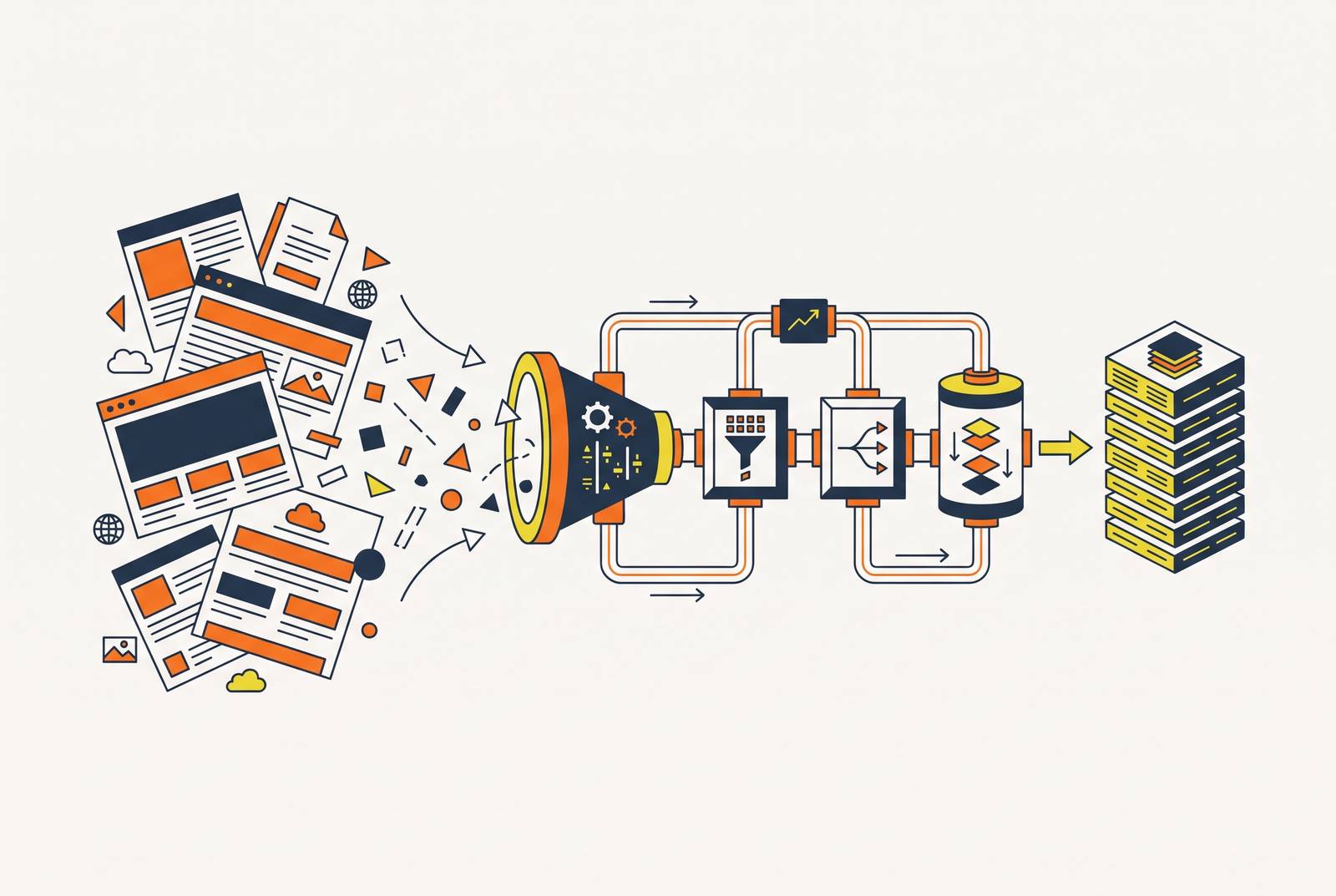
A large crawl shrinks at every stage. URL deduplication and robots.txt compliance remove candidates before extraction, while language filtering, boilerplate removal, near-duplicate detection, and quality assessment reduce what remains. Only a small fraction of the original pages may survive. This lossy cascade determines the knowledge, biases, and blind spots available to the model, because each stage changes the material from which it learns. Model architecture cannot bring back information the pipeline has left out.
Published corpora make those necessary decisions less visible. C4 and FineWeb both derive from Common Crawl, illustrating how a shared source can underpin distinct curated datasets. Why not use one and skip pipeline design? That is a valid choice for general pretraining, but a ready-made corpus remains a snapshot with a fixed cutoff date. Domain-specific, current, or proprietary material still requires a custom pipeline, and its value depends on deliberate selection.
Crawl strategy: how scope, politeness, and compliance decisions constrain every stage that follows
Source selection sets the boundaries of the eventual corpus. General pretraining favors broad crawls, while domain-specific fine-tuning and RAG index construction call for curated seed URLs and targeted scope. Content never fetched cannot be recovered downstream. A technically successful crawl can therefore be poorly aligned with the intended model if its sources underrepresent the domains the model needs. Scope is a quality decision before it becomes a scheduling problem.
Permissions and crawl behavior constrain that scope in practice. Publisher robots.txt files increasingly name AI-specific user-agents, including GPTBot, CCBot, ClaudeBot, and Bytespider, so checking only wildcard rules misses explicit restrictions. Terms of Service govern reuse separately and also need checking. Even with public reachability, these checks for permission to build a commercial training corpus belong before fetching.
Politeness also has a concrete engineering unit. Rate limits must apply per domain, because origin load triggers blocks regardless of how many proxies distribute the requests. A larger proxy pool does not reduce that load. Self-identification through a real User-Agent and contact URL gives site operators an escalation path before blocking the crawler entirely.
Extraction: why rendering, format, and anti-bot infrastructure determine text quality before any filtering runs
JavaScript rendering is a required part of extraction for dynamic pages. A pipeline must distinguish retrieving HTML from obtaining the content it intends to preserve. Raw HTML requires parsing and boilerplate removal to become usable text, while Markdown or structured JSON can simplify downstream ingestion. Filtering cannot restore content that extraction never captured, so this layer establishes an upper bound on the quality available to later stages.
Semi-structured content makes that limit especially visible. Tables, lists, and infoboxes contain factual relationships that unstructured text extraction can miss. SCRIBES, published at ICLR 2026 by researchers from Meta with a lead author from Stanford, addresses this through reusable extraction scripts generated with reinforcement learning. Its efficiency comes from shared layouts within sites. Rather than running full LLM inference on every page, it applies a script across structurally similar pages, achieving over 13% better script quality than strong baselines in its experiments.
Sustained extraction also depends on the target’s protection level. Anti-bot systems can detect narrow ASN ranges, invariant TLS fingerprints, and unnaturally regular timing associated with AI training crawls. Proxy choice therefore follows the permitted workload. Datacenter proxies suit open APIs and static bulk downloads, rotating residential proxies serve protected news, social, and SERP properties, and mobile proxies address the hardest targets through carrier-grade NAT. These production constraints must be addressed within a source’s restrictions.
Filtering: why heuristics alone discard valuable content and how model-informed signals recover it
Once content is extracted, the question changes from availability to judgment. Language identification, length thresholds, n-gram perplexity scores, and domain blocklists cheaply remove obvious noise, but their assumptions often fit the average page. Technical documentation, specialized writing, and low-resource language text may look anomalous while containing precisely the information a model needs. How much a filter rejects alone cannot show whether it removes noise or information the model needs.
DCLM demonstrated that data curation could deliver a substantial improvement over a strong baseline at lower compute cost. Apple’s Apple Intelligence Foundation Language Models Tech Report 2025 supports the move beyond rigid rules at the extraction boundary, describing LLM-based identification of main content in domain-specific documents that often outperformed traditional methods. Those methods had discarded valuable tokens.
The practical architecture is heuristic-first and model-second. Cheap rules remove clear garbage, while model-informed signals judge the content whose quality is harder to tell. Inference compute is spent where it can change selection. Multilingual pipelines need particular care because filters trained on high-resource languages systematically underperform on low-resource ones. OSCAR’s broad language coverage illustrates why multilingual sourcing remains a distinct concern rather than something a general cleaned corpus automatically resolves.
Deduplication: how redundant content degrades training efficiency and what near-duplicate detection actually catches
Repeated passages can teach a model to reproduce them. When the same text appears thousands of times, memorization creates privacy exposure if it contains personal data and copyright risk if it is protected work. Repetition is therefore more than wasted training compute. It overweights a signal simply because that signal was republished.
Exact URL and hash matching catch identical copies but miss near-duplicates. Syndicated news, templated product descriptions, repeated footers, and scraped-and-republished articles can differ by a few tokens while conveying the same information. Near-duplicates require a broader comparison. MinHash locality-sensitive hashing is a standard approximate approach because exhaustive comparison across hundreds of millions of documents is computationally infeasible. The goal is to detect redundant information beyond byte-for-byte identity.
In a corpus dominated by Common Crawl pages, aggressive deduplication can remove proportionally more web material than books or scientific papers. Teams must track the mix of domains left after deduplication. The Pile offers a separate but related provenance lesson, as its Books3 subset was removed from public versions after copyright claims. Teams need to know where the content they keep came from, even when it is unique.
Quality signals beyond text: structured data, format conversion, and what makes a corpus training-ready
Filtered, deduplicated text still needs a representation the model can consume. Tokenization and chunking depend on the model architecture, while chunk size determines the context visible in a single forward pass. Boundaries are not neutral formatting choices. Overlapping and non-overlapping chunks represent information around those boundaries differently, so accepting defaults blindly can undermine otherwise careful extraction. These decisions need to be made when designing the corpus, before it is time to export files.
Structured content adds another transformation problem. A table preserved during extraction can lose its relational structure when flattened into a sequence of words. Serialization must preserve more than the text. JSON, Markdown tables, and natural-language descriptions can perform differently depending on the evaluation task. SCRIBES improved downstream question-answering accuracy for GPT-4o by more than 4% relative to weaker extraction approaches, showing that structure preservation has consequences beyond a cleaner intermediate output.
Corpus composition also needs planning before processing begins. Broad crawls provide pretraining volume, Wikipedia and Stack Exchange dumps supply high-signal factual material, and custom scrapes supply domain-specific or current content. This tiered strategy permits intentional domain weighting. Token-count targets then express the intended mix. Measurements after processing can test that plan, but teams still need to make it first.
Freshness presents a different boundary because no serialization choice can update a static snapshot. Agents and RAG applications that need recent information require ongoing collection or live retrieval from the start. You.com’s Contents API and Web Search API meet that need for retrieval with current web content, which a fixed training corpus cannot provide. Static curation and live grounding serve complementary roles. Over time, both factual currency and the compliance state of sources can change, so maintaining relevance also requires revisiting the conditions under which content was collected.
Legal and regulatory constraints that now apply before the first fetch
In the 2026 regulatory environment, pipeline design must distinguish collection legality from training legality. Robots.txt, Terms of Service, and data-protection requirements govern different questions from copyright and AI Act transparency obligations. One check cannot answer them all. Engineers need to record the conditions under which content was collected and how it will be reused before deciding it can be used for training.
Machine-readable permissions extend beyond robots.txt. A crawler must account for purpose-based signals such as ai.txt and text-and-data-mining reservations expressed through TDMRep. The W3C Community Group’s TDMRep specification describes how to send these signals through a well-known file, HTTP response headers, and HTML meta tags. Its status as an implementation mechanism outside the W3C Standard category prevents it from being mistaken for a universal legal authorization or prohibition.
Personal data requires its own detection stage. A unique passage containing personal information survives deduplication, so redundancy controls cannot resolve GDPR or CCPA exposure. A compliance manifest must also record each source URL, the robots.txt and Terms of Service state at crawl time, opt-out signals, and structured-dataset licenses. Historical conditions cannot reliably be reconstructed afterward. For corpora meant for EU use or EU users, dedicated personal-data detection must be part of the pipeline’s quality controls.
How to choose infrastructure for each pipeline stage
Infrastructure selection follows from the stage that needs support. Modal supports custom collection code, parallel scraping, JavaScript rendering with Playwright, and scheduled execution within infrastructure also used for preprocessing and training. That reduces separation between collection and processing. Teams starting with Common Crawl, FineWeb, Wikipedia dumps, or Stack Exchange dumps may not need a dedicated scraping platform at all. Their constraint may instead be the compute required to transform existing material.
For that processing workload, Modal provides serverless GPU infrastructure with per-second billing, scale-to-zero, fast cold starts, and batch processing queues. Its supported work includes HTML extraction, deduplication, filtering, tokenization, chunking, and format preparation. SOC 2 Type II certification is another infrastructure attribute, but it does not replace the corpus-level permission and provenance checks described earlier.
Live grounding requires a different service boundary. You.com’s Web Search API and Contents API supply web search and extraction for inference-time retrieval, RAG pipelines, and agentic workflows needing current, cited content. SOC2 certification applies to the platform. Zero data retention is available as an optional enterprise add-on for the Web Search API and is not enabled by default, while support for the Contents API is on the roadmap. Those distinctions belong in selection decisions rather than being flattened into a platform-wide retention assumption.
Research benchmarks likewise need their scope preserved. The Research API previously held the top DeepSearchQA position but no longer leads as of late 2026, while the Finance Research API ranks first on FinSearchComp’s T2 Simple Historical Lookup sub-task. The architectural choice is to use a curated static corpus for pretraining and fine-tuning, with live APIs supplying grounding where freshness and citation are required.
The pipeline as an ongoing system, not a one-time build
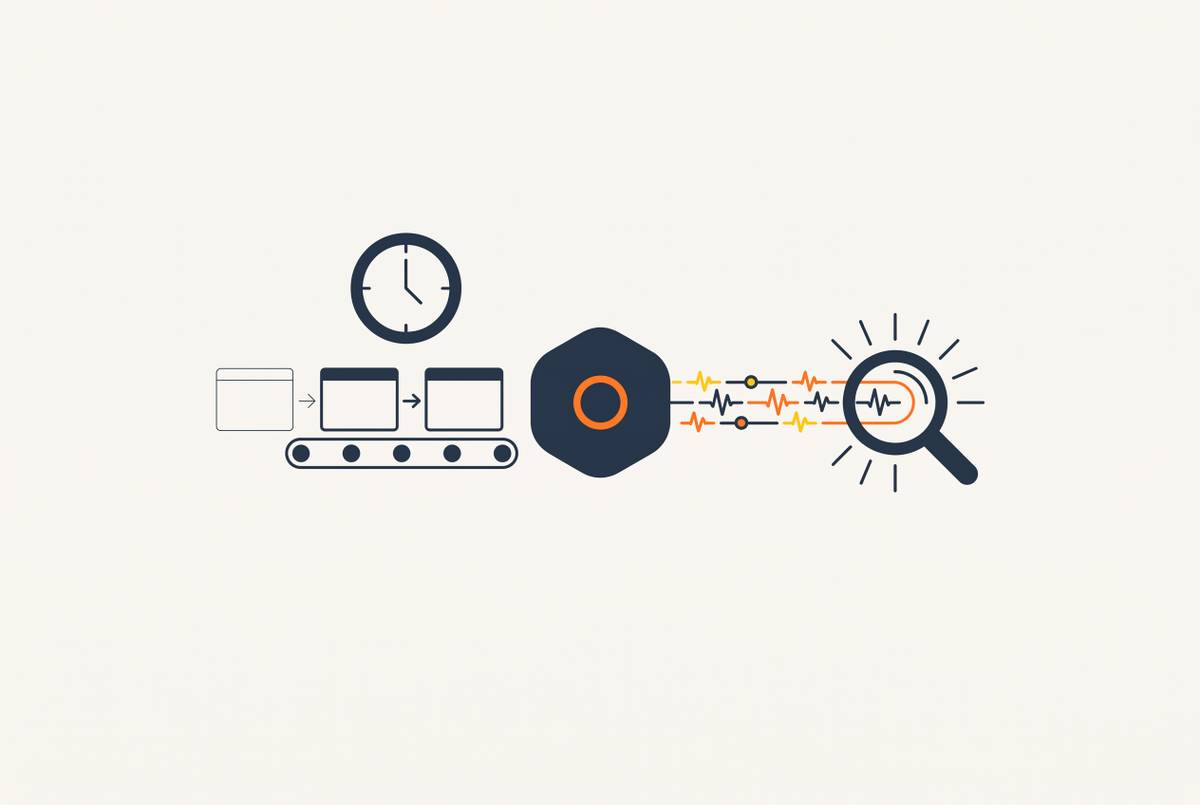
A pipeline begins aging as soon as its crawl ends. News, regulatory filings, product documentation, and scientific literature change, while source permissions can change independently of content. Maintenance must address both forms of drift. Scheduled re-crawls need fresh compliance checks rather than cached initial permissions, and the manifest must preserve the source, license, and opt-out state associated with each collection. Autonomous multi-step extraction agents can reduce maintenance intervention and handle interaction-dependent content, but do not eliminate these obligations.
Model evaluation provides the feedback that makes maintenance more than repetition. Persistent weakness in a domain may indicate that sourcing or filtering underrepresented it. The diagnosis should reach back into the pipeline. Tracking evaluation by domain and monitoring composition after deduplication gives teams evidence for revising seed sources, filtering decisions, and domain weights. What the model can learn depends on choices that evaluation must be allowed to change.