Scheduled Web Scraping vs Real-Time Search APIs for AI Feeds
Pick freshness over speed: query-time retrieval wins for changing facts.
The choice between scheduled web scraping and real-time search APIs for AI feeds starts with a question about evidence. How old can information be before an agent’s answer becomes wrong? Scheduled scraping suits stable, reusable datasets and reproducible records. For most agentic workloads that depend on changing facts, query-time retrieval is the stronger architectural fit, provided it meets the workload’s latency, accuracy, and compliance requirements.
Why data freshness is an architectural decision, not a tuning parameter
An agent built on LangChain, CrewAI, or the OpenAI SDK inherits the limits of the evidence it receives. Its framework cannot recover a fact that retrieval missed, and even a capable model needs a newer source to reliably correct evidence that is out of date. Choosing when information enters the system therefore sets a boundary on what every downstream reasoning step can establish.
Scheduled collection assumes that the relevant sources can be fetched in advance and remain useful until the next fetch. Query-time retrieval makes a different commitment, locating evidence when the need arises. If a task depends on changes between those moments, increasing model capability does not close the gap.
How each approach actually works: scheduled scraping and real-time search APIs as retrieval architectures
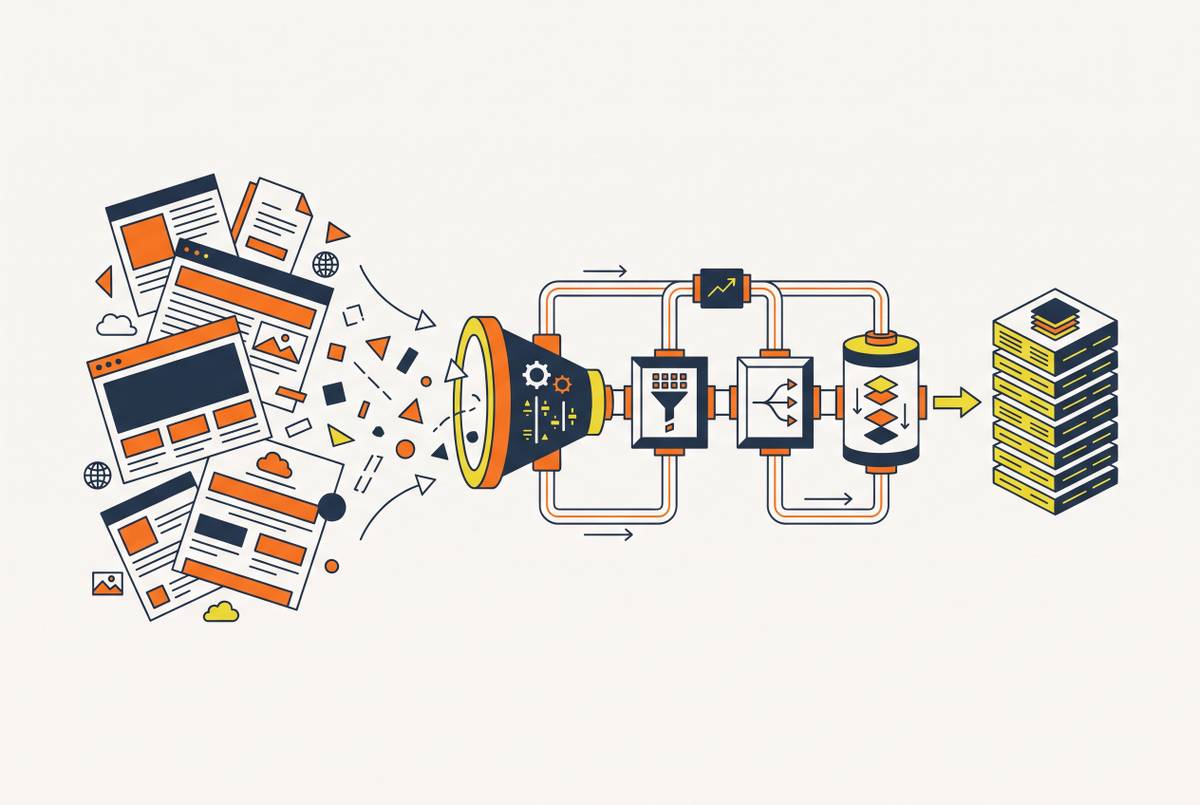
Pages are collected on a fixed schedule, through an event-triggered API call, or within a multi-step pipeline. A typical workflow fetches HTML, extracts text, embeds it into vectors, builds an index, and serves the stored information to the model. Rendering, proxy rotation, and anti-bot handling belong to the collection phase. The agent queries the cache.
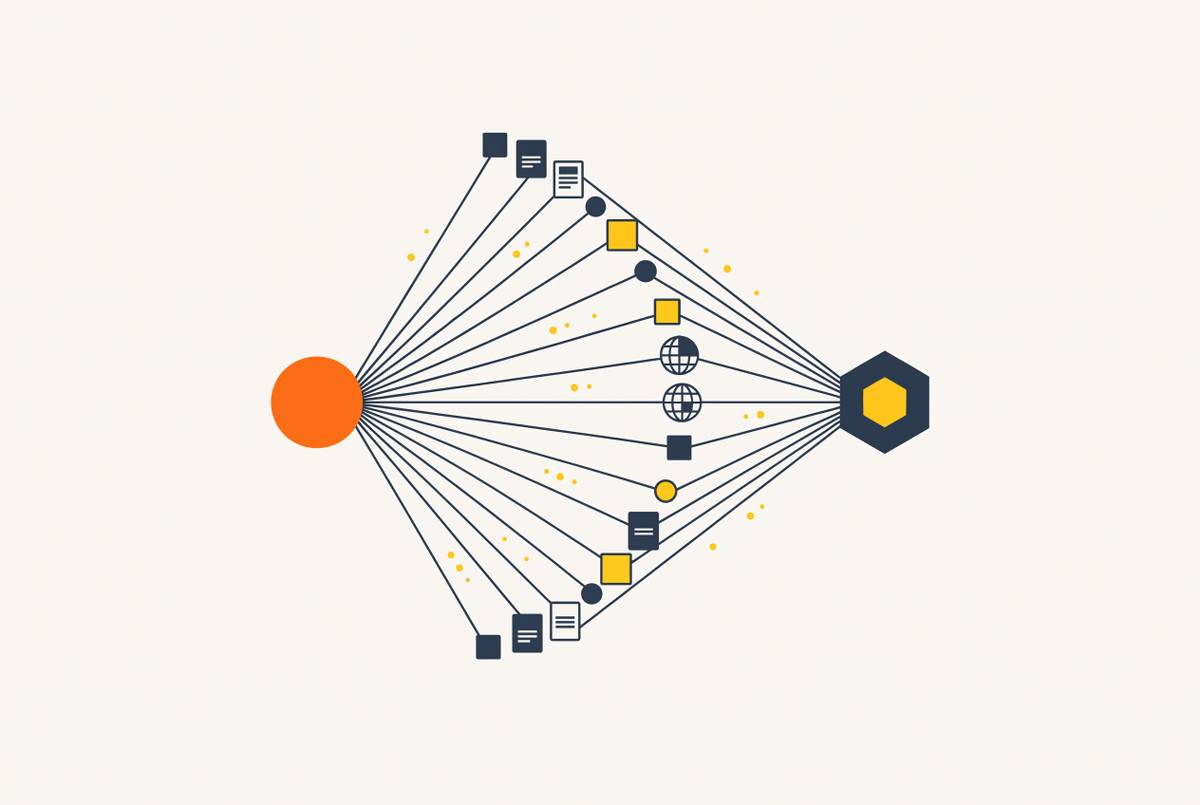
Real-time search APIs instead retrieve at inference time. The agent submits a query and receives ranked, cleaned results without maintaining its own pre-fetched corpus. AI-native APIs differ from keyword-oriented SERP wrappers by accepting semantic objectives and returning structured content with citations. Retrieval-augmented generation, or RAG, connects this external evidence to the generative model’s reasoning. What reaches that model depends on freshness controls, domain filters, and what extraction gets from JavaScript-heavy pages.
Both approaches can return content structured from raw HTML, while independent-index APIs run their own crawlers independently of Google or Bing. The Semantics Delivery Network paper at HotNets’26 proposes another infrastructure change, shifting indexing, searching, and smart-caching from whole URLs to semantic chunks. Its proposal treats the passage an agent needs as the unit of delivery.
The freshness dimension: what staleness actually costs an agent
A scheduled cache has an unavoidable interval between collection and use. During that interval, an agent can retrieve what was true at the last fetch, but not changes that the pipeline has yet to collect. The answer may still sound entirely plausible. This is why staleness is harder to detect than an explicit retrieval failure, particularly when a model’s frozen training knowledge offers no newer evidence.
The consequence depends on the fact being retrieved. Prices, regulatory filings, adverse media, and market events can change faster than a scrape cycle, making finance and legal workloads especially exposed. Query-time freshness controls let an agent specify how recent its results must be, something an already-built scrape cache cannot reproduce at query time. Yet recent pages alone are insufficient if retrieval repeatedly selects the same SEO-optimized sources. Source diversity is a separate safeguard against narrow evidence.
The counterexample is a task whose reference point belongs in the past. Historical analysis, document processing, and stable reference content may need a fixed corpus. A timestamped cache is correct by design there. Fresher data should be assessed by whether it would improve or distort the task’s answer.
Latency, concurrency, and what "real-time" means under agent traffic patterns
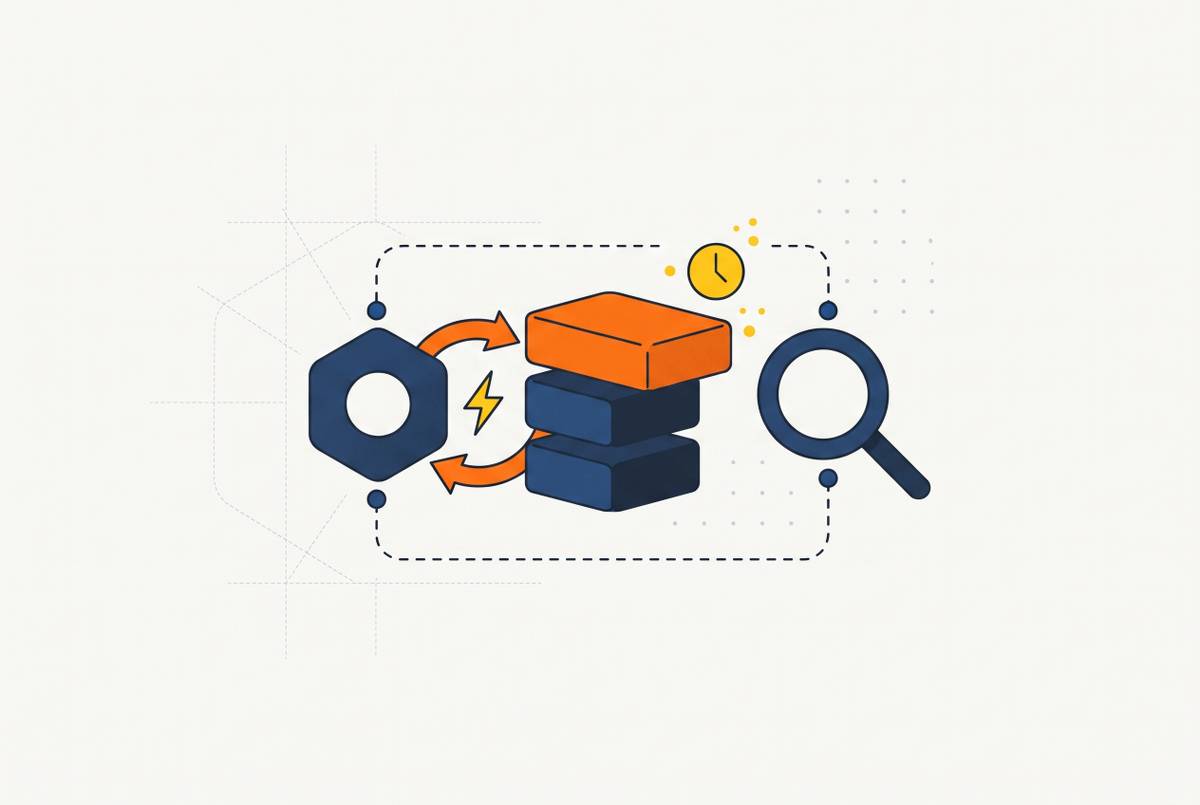
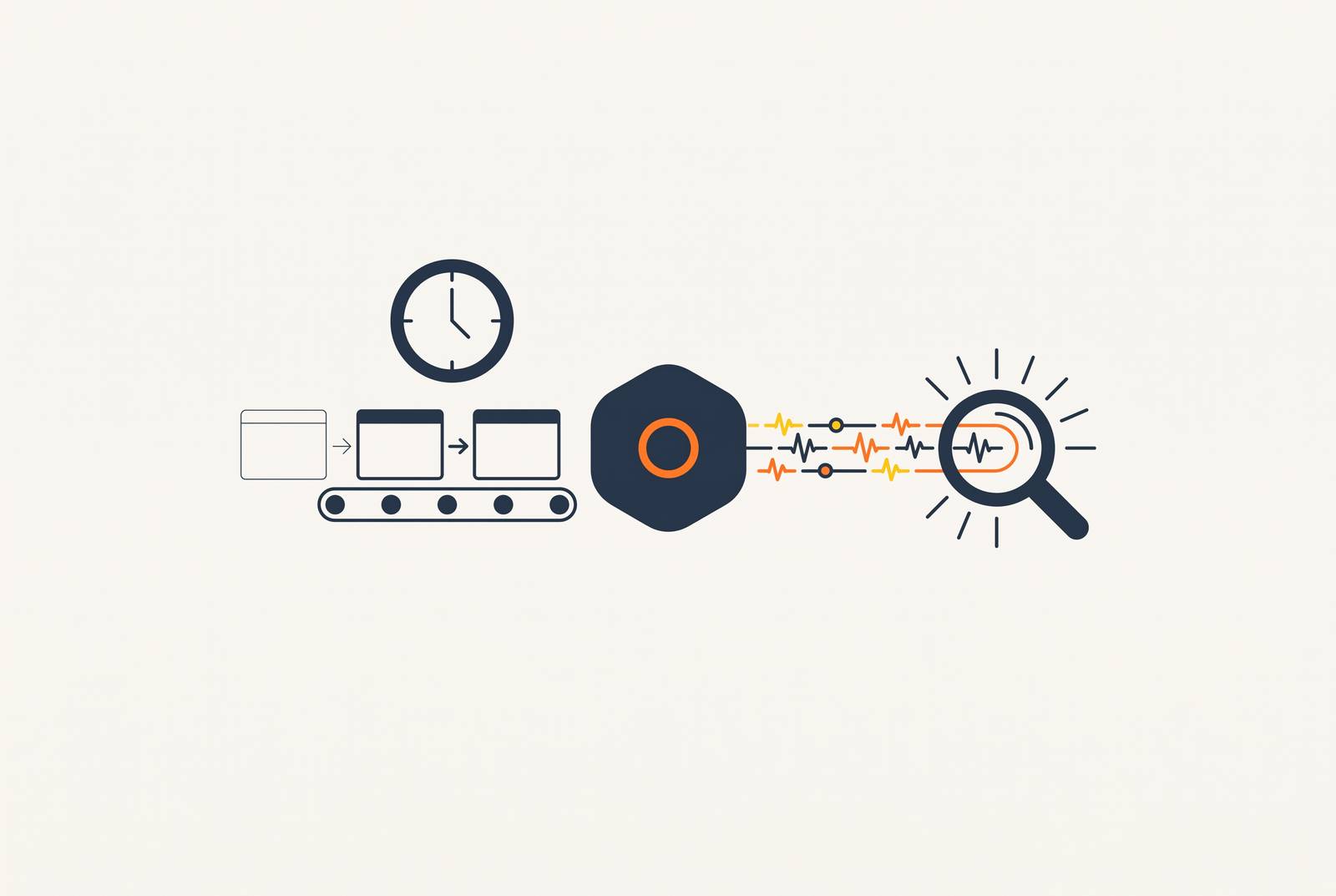
Freshness and speed describe different properties of retrieval. A cache can answer with near-zero query-time latency because collection and processing have already happened. A real-time API moves retrieval work into the request itself. In a synchronous agent loop, the next step waits for that request, so delays add up across reasoning turns.
Concurrency makes the comparison more demanding than a single-request test. Agent traffic is bursty and multi-step, and an endpoint that responds quickly in isolation can slow under parallel load. Sub-5-second synchronous latency is a useful threshold for the live workflows described here, but it does not establish behavior under concurrency. You.com publishes ~445ms p50 latency as a concrete production reference.
Browser-native scraping agents have another performance constraint. Tasks that repeat still need full browser sessions and LLM calls for each page, and the agent can behave differently from one run to the next. Asynchronous deep research endpoints serve a different purpose, taking minutes rather than milliseconds to complete multi-step synthesis. Their longer response time can be appropriate for research, but it is not interchangeable with synchronous search inside a live reasoning loop.
Cost structure and when scheduled scraping is genuinely cheaper
Scheduled scraping has its strongest economic case when the same content serves many requests. Collection costs arrive upfront, and the stored page can then be queried repeatedly at near-zero marginal retrieval cost. Real-time APIs charge per query. For stable content and repetitive lookups, paying to retrieve essentially unchanged evidence each time can be difficult to justify.
Scale changes that calculation in both directions. Proxy pools, headless browser fleets, and anti-bot infrastructure have fixed costs that can be too high for smaller teams. Once those systems are worth the cost and get heavy use, batch collection of slowly changing URLs can cost less than per-query retrieval. The advantage is genuine within that boundary. That cost advantage is less certain when the comparison includes the work of maintaining extraction, indexing, and getting automated access as it becomes harder.
The retrieved format also affects inference spending. Raw HTML uses up context on boilerplate before the model gets to useful content, while cleaned, structured Markdown cuts that waste. This is not an exclusive advantage of APIs, since a scraping pipeline can also produce structured outputs. The cost comparison therefore includes who pays for the initial fetch and who builds and maintains that transformation.
Reliability, maintenance, and the hidden operational cost of owning your crawl
Owning collection also means owning its failure modes. CAPTCHAs, JavaScript challenges, fingerprinting, and behavioral detection need engineering work that continues after the one-time setup. Cloudflare began blocking AI-based scraping by default in July 2025, illustrating how access conditions can change outside a developer’s control. As sites work harder to block automation, there is more to maintain than a growing list of URLs.
Extraction can fail even when access succeeds. A layout change may leave a previously working scraper returning malformed or empty evidence without alerting the pipeline. LLM-based extraction can adapt to some changes, but it adds latency and can itself hallucinate output. Reliability includes both completion of the crawl and the quality of the extracted content.
Search APIs shift much of this work to the provider, including crawling, rendering, and index freshness. The developer’s direct dependency shifts from each target site to an API contract. A timestamped, version-controlled cache offers a more reproducible record of past evidence than a live query whose results can change on re-run.
Compliance pressure and how GDPR, the EU AI Act, and anti-scraping enforcement change the build-vs-buy calculation
The European Data Protection Board’s guidelines on web scraping for generative AI state that GDPR applies to scraped personal data even when it is publicly visible. Public visibility is not consent or a legal basis. Special-category data needs both an Article 6 legal basis and an Article 9(2) exception. The guidelines also cover purchased, pre-collected datasets, so buying a corpus does not remove the underlying analysis.
The EU AI Act adds obligations specific to general-purpose AI model providers, including a public training-content summary, a copyright compliance policy respecting opt-outs, and technical documentation covering data provenance. These are not blanket obligations for every retrieval application. Partial enforcement applies by August 2026, while high-risk obligations are deferred to December 2027 and August 2028. Architectural assessment must distinguish retrieval from model training and identify the organization’s role.
India’s DPDP Act also shows why the rules for scraping depend on the jurisdiction. Its extraterritorial scope concerns processing connected with offering goods or services to individuals within India, and it exempts data made publicly available by the data subject. Access and retention remain separate questions. For legal, financial, and healthcare procurement, Zero Data Retention can be a prerequisite. You.com has SOC2 certification and offers ZDR as an optional enterprise add-on on request, so retention terms belong in the initial assessment of an API purchase.
Accuracy benchmarks as the missing variable in most architecture decisions
Cost and latency describe the burden of obtaining evidence, but neither establishes whether it supports the right answer. Public accuracy benchmarks add that missing dimension. SimpleQA and Verified SimpleQA address factual accuracy on short-answer web queries, while RAGAS evaluates retrieval quality, grounding, and answer faithfulness within RAG pipelines. Their usefulness depends on how closely those tasks resemble the intended workload.
More involved agent behavior calls for different tests. GAIA addresses multi-step retrieval and synthesis, and DeepSearchQA evaluates deep research across multi-step web investigations. FinSearchComp uses tasks like those professional financial analysts do, drawing on more than one source and time period. Its results show a trade-off between the highest-accuracy system and the fastest system, with higher accuracy taking substantially longer at P50. Speed is not a proxy for correctness.
A custom scraping pipeline has no ready-made benchmark results to compare in the same way. Its accuracy depends on extraction quality, cache age, and coverage of the selected sites, all of which the developer owns. That pipeline needs direct evaluation beyond successful extraction. API benchmark results offer a shared starting point for comparison, but their relevance still depends on the agent’s actual questions.
Which workloads belong to each approach, and where the architectural conclusion is clear
The diagnostic starts with the workload’s time horizon. Does it query stable references, historical archives, or internal documents over and over? If so, scheduled collection can combine reuse with predictable evidence. It is also a rational choice when the task requires a timestamped audit trail, when data sits behind authenticated or proprietary systems inaccessible to public search, or when validated extraction and compliance infrastructure already make another workload inexpensive.
Query-time retrieval is a good fit for adverse media screening, price discovery, regulatory filings, and breaking news synthesis. Multi-step loops make that choice stronger when evidence must be up to date at each turn, as long as the API meets synchronous latency needs. Teams with little engineering time have another reason to avoid running their own collection infrastructure. In regulated settings, that choice remains conditional on documented provenance and acceptable retention terms.
Research tasks need a further distinction between freshness and immediacy. You.com’s Research API combines live retrieval with multi-step synthesis and cited, structured output on a longer time horizon than synchronous search. It fits tasks that tolerate minutes of latency for depth. Gartner expects enterprise adoption of task-specific agents to grow sharply by end-2026, increasing the range of information needs that retrieval systems must serve. For most changing, open-ended agent workloads, anticipating every need through scheduled crawls becomes the less defensible assumption.
Evaluating a real-time search API: the five axes that separate production-grade from prototype-grade
For teams whose workload points toward real-time retrieval, evaluation should cover five axes. Freshness asks how recent returned pages are and whether query-time controls exist. Source diversity asks whether results come from a range of authoritative domains or keep returning the same high-SEO pages. Latency under concurrency measures behavior under bursty parallel traffic. Compliance checks cover retention, SOC2 certification, and documented provenance, while public benchmark accuracy shows whether the evidence helps get answers right.
You.com offers Web Search API, Answer API, Contents API, Research API, and Finance Research API. Its research endpoints are reported as top-ranked on DeepSearchQA and FinSearchComp, respectively, giving evaluators relevant public benchmark reference points. Those results do not replace workload testing. Nor does certification substitute for establishing whether the required ZDR arrangement is included in the proposed service.
The next step is to reproduce relevant benchmark results and run representative agent traffic before committing. Tests should use the query types and concurrency patterns the provider will face in practice, beyond synthetic demos alone. MCP server availability, Python and REST coverage, and documentation quality then help assess integration effort. These are useful secondary criteria, but accuracy and compliance take precedence.