Macro and Alternative Data Integration in AI Research Workflows
Research agents need fresh, traceable data pipelines more than better models.
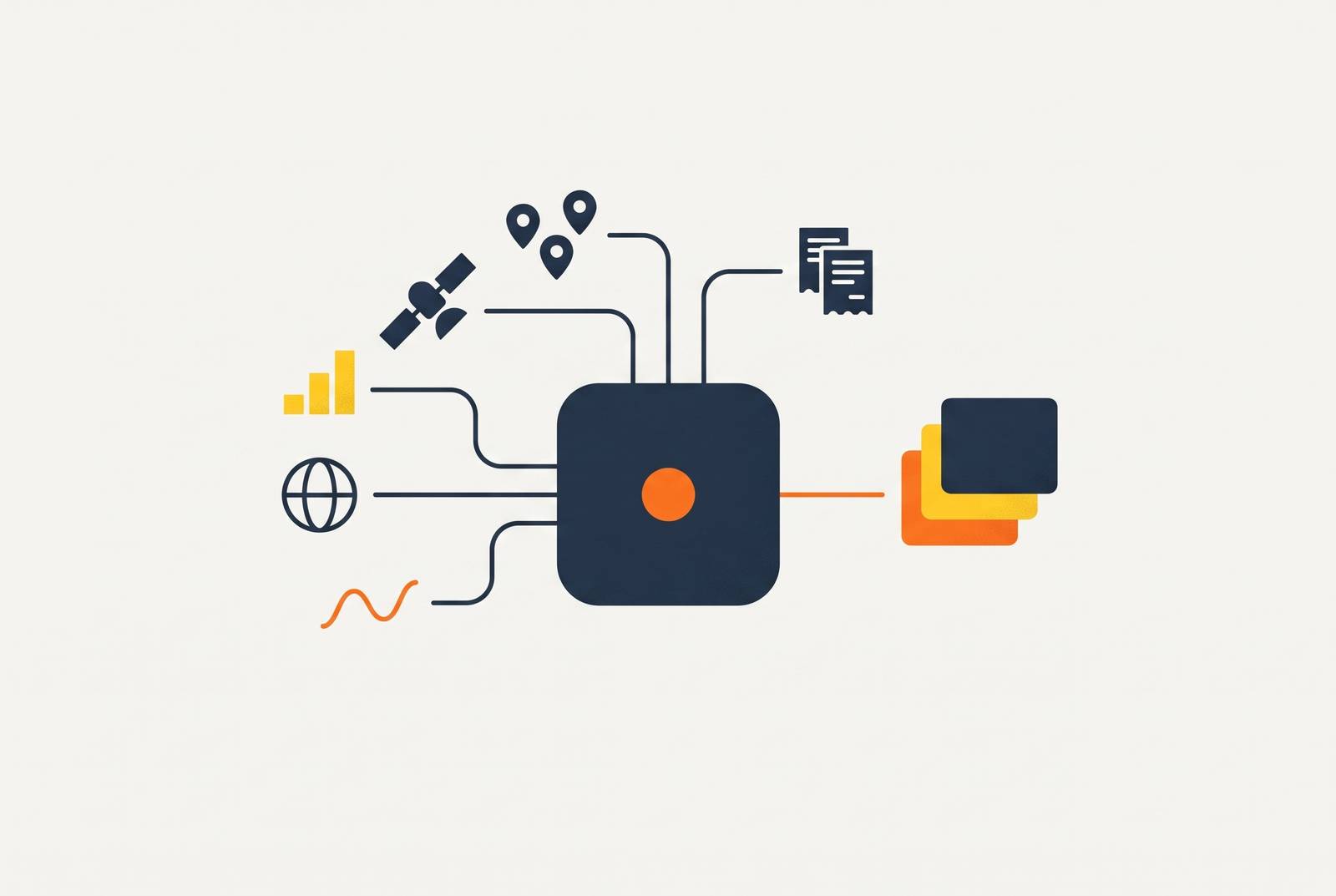
Integrating macro and alternative data into AI research workflows is an infrastructure problem before it is a modeling problem. Trustworthy intelligence depends on fresh, structured, verifiable evidence reaching the agent when it reasons, and on that evidence shaping its judgment. The decisive choices concern latency, grounding, monitoring, and governance alongside the model that generates the answer.
Why AI research agents fail when the data layer is built for humans
A research agent can produce a polished answer from information that was accurate 18 hours ago and is wrong now. Nothing in its fluency exposes the stale input. A pricing recommendation based on last night’s warehouse data, for example, may describe a market that has already moved. The system need not crash to fail. Its plausible output can make the failure harder to detect than an explicit error.
That problem begins with the mismatch between frozen training knowledge and time-sensitive questions about market conditions, regulatory changes, or company filings. Fine-tuning cannot add changes that happen after it is done. Yet the traditional alternative, batch ETL followed by nightly warehouse refreshes, was built around human analysis, leaving a mismatch with access needs at the moment of inference. NVIDIA GTC 2026 highlighted structured data and warehouses as foundations for trustworthy AI, with GPU-accelerated processing intended to speed data access. That recognizes the need to accelerate the data layer while retaining warehouses.
Keeping history for research and providing up-to-date evidence serve different needs. Both have a role in research. DigitalOcean and Bright Data’s October 2026 announcement illustrates the latter through a retailer’s pricing agent accessing that morning’s market prices and product data before recommending a price. A capable model cannot compensate for the absence of those inputs.
What "grounding" actually means in a research pipeline and why retrieval alone is not enough
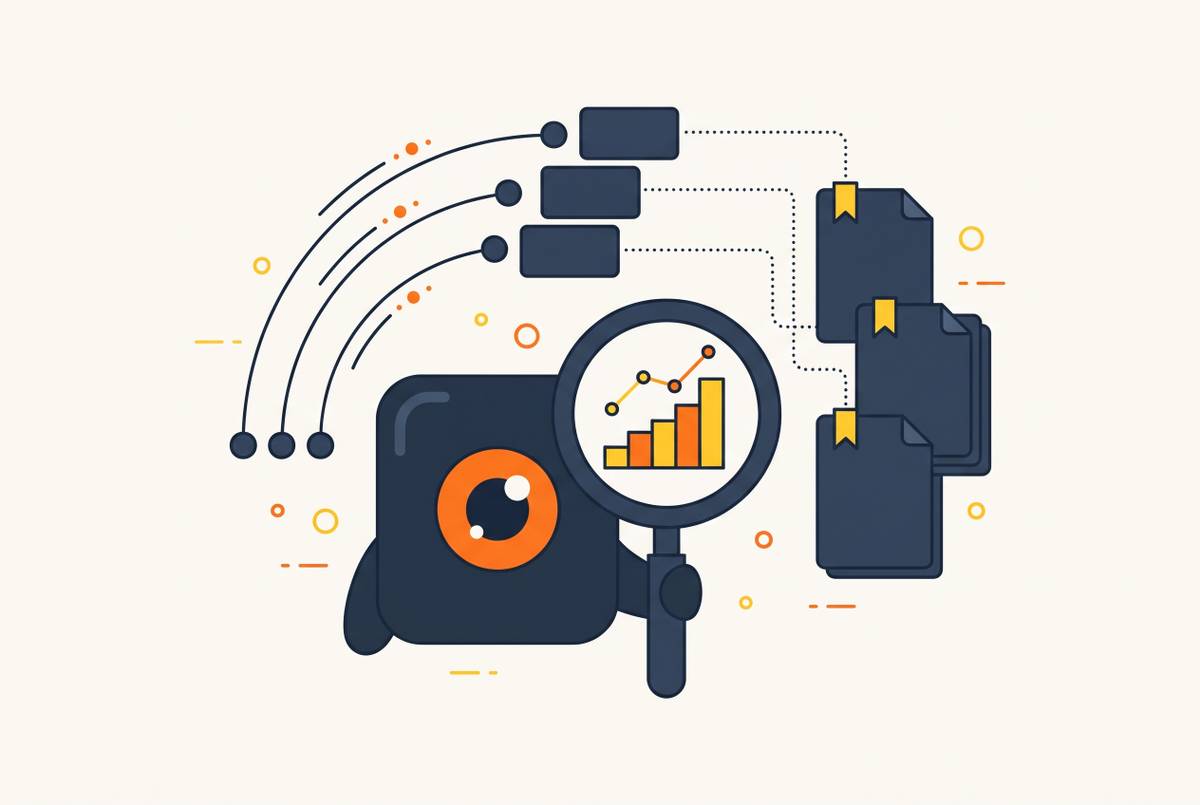
Grounding supplements training weights by anchoring an agent’s reasoning to specific, citable, fresh sources. In a live research pipeline, it means supplying structured evidence at the moment the agent acts. But access is only part of the mechanism. Did the agent just retrieve the disclosure it needed, or did that disclosure change its judgment?
The retrieval-integration gap makes this question central to evaluation. Miao Liu and Zhizhe Liu’s research finds that the pattern replicates across model families and judgment tasks and persists with more capable models, though they delay its onset. An investment research system can therefore retrieve the right information without incorporating it into its conclusion. Retrieval accuracy alone cannot certify sound investment analysis. Model capability and workflow architecture jointly determine the result.
Modern RAG architecture has evolved since 2024 in response to this broader problem. Instead of retrieving top-k results and generating in one pass, a system can classify the query, route it to a vector index, knowledge graph, SQL, or code search, then retrieve in stages and rerank before generation. It may also reflect before answering. These steps create a more deliberate path from question to evidence to judgment, but their presence is not proof of success. Evaluation still has to establish whether the retrieved content influenced the final answer.
The six data-access functions a production research agent actually requires
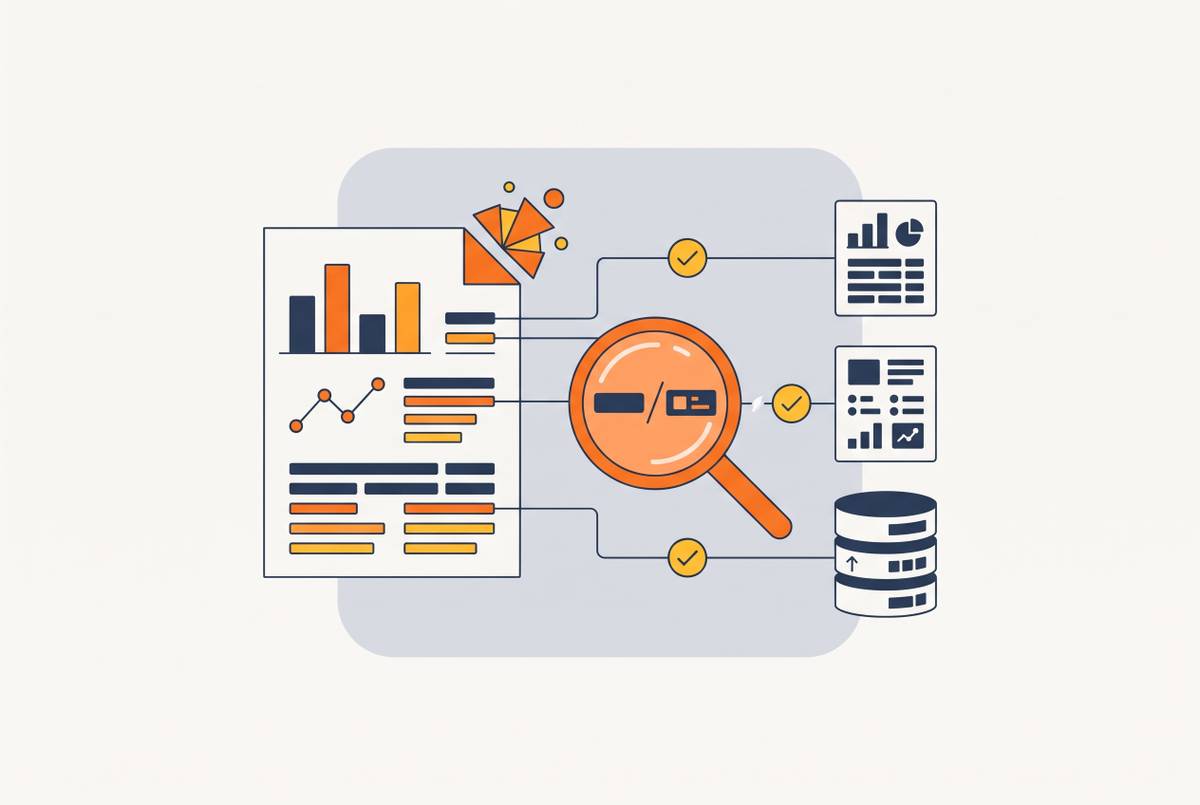
Parallel’s May 2026 guide distinguishes six functions across the data lifecycle, beginning with search and extraction. Search uses semantic objectives to return ranked excerpts rich in information, so the agent has sources to reason from. Extraction solves a different problem. It turns pages into clean markdown without requiring Puppeteer setup or site-specific scraping logic, avoiding the fragility of treating page discovery and content preparation as one operation.
Deep research addresses the limits of single-pass synthesis. It uses planning to decompose a task, select sources, run sub-analyses, and merge findings into structured reports. The answers function addresses verifiability by grounding responses in live web data with citations. These functions have different jobs to perform. A multi-source report still needs evidence that a reader can trace, while a cited response does not necessarily provide the planning required for a complex investigation.
Monitoring prevents the pipeline from remaining a point-in-time query tool. A developer defines a natural language query, selects an hourly, daily, or weekly cadence, and provides a webhook endpoint for notifications when something material changes. Discovery, meanwhile, builds structured datasets from natural language requests, enriching companies, accounts, or investment candidates with live, cited, confidence-scored fields. Search alone leaves these other needs unresolved.
Freshness controls, domain filters, extraction quality on script-heavy or access-restricted pages, and sub-5-second synchronous latency all affect its usefulness in real-time workflows. Token efficiency also constrains reasoning quality. Structured outputs rich in information cut the cost and distraction of processing raw HTML, so preparing content for use is part of the reasoning architecture as well as a formatting task.
Why financial and macro research workflows place uniquely demanding requirements on each layer
For quant desks and trading teams, alternative data can retain commercial value if it arrives quickly or be out of date if it arrives too late. Real-time or near-real-time feeds need to reach trading models and risk systems. Collection is not the same as actionable integration. Web scraping appears in a majority of hedge fund alternative data cases, and a majority of advisers use web-scraped data to train custom AI systems, yet only a minority have adopted AI-processed data directly to optimize investment strategies.
Financial research also requires more than a quick answer. Evidence collection, forward-looking analysis, and report writing involve distinct decisions about sources and interpretation. An EPS forecast, for example, is a sub-analysis within a wider workflow. Deep-research architectures fit this sequence because they can plan and coordinate its stages. The retrieval-integration gap is especially consequential when the output is an investment judgment.
OpenBB’s February 2026 launch of OpenBB Workspace as a Snowflake Native App on the Snowflake Marketplace illustrates another requirement. Firms can build analytics applications and deploy AI workflows inside their Snowflake environment without moving data outside that governed setting.
How the monitoring layer changes the agent from a query tool into a continuous intelligence system
Parallel’s portfolio monitoring example makes the distinction tangible. A query can trigger an alert when a new Phase 2 trial is posted for a GLP-1 analog or the FDA grants Fast Track to a KRAS inhibitor. The agent receives a structured, cited signal. It does not have to discover the event by deciding to run another search.
This changes who is responsible for noticing change. A point-in-time workflow requires a person or agent to know when to ask, while a monitoring API handles re-querying, change detection, and structured alert delivery at the chosen cadence. Monitoring assigns responsibility for periodic checks to a dedicated layer, allowing the research agent to respond to a notification without repeating the same query on every inference cycle.
For macro research, the pattern extends to regulatory changes, central bank communications, earnings releases, and competitor pricing shifts. The useful signal is the change. Human-staffed surveillance is expensive and inconsistent, while high-frequency re-querying consumes tokens and remains sensitive to latency and polling intervals. The cadence therefore reflects how quickly a changed fact can invalidate the research.
Detection, however, is not the completed analysis. A synthesis layer must connect the cited signal to the wider question and produce a grounded research output. This closes the loop between observing a change and interpreting its significance, without treating an alert as an investment conclusion.
The compliance and governance obligations that the data pipeline must carry, not bolt on
A multi-agent workflow can break compliance rules even when every agent does only what its stated permissions allow. A compliance reporting agent might ingest unmasked PII from a data quality agent’s intermediate output, creating a GDPR violation through the flow between them. Governance must account for what agents pass to one another as well as what each can access independently.
Perforce’s 2026 State of AI and Data Privacy Report, based on 518 enterprise organizations, finds that 80% will invest in AI/ML data privacy in 2026–2027. The report also describes agentic development accelerating faster than compliance processes can track. Planned investment is not evidence of present control. When AI-generated change outpaces governance review, confidence in individual components can obscure weaknesses in the combined workflow.
The architectural requirements include audit trails for every data access decision and monitoring of intermediate outputs as well as final responses. Regional data residency and privacy obligations must also shape the pipeline. Singapore’s Model AI Governance Framework for Agentic AI is part of the expanding guidance landscape in 2026, but it remains voluntary and has no binding enforcement mechanism. Guidance and legal duties are not interchangeable.
Zero data retention policies, SOC2 certification, and cited outputs are basic requirements for enterprise use and need to be in place from the start. They address different aspects of the problem. Retention governs what persists, certification addresses controls, and citations make sources traceable, while none removes the need to examine how sensitive data moves between agents.
How open protocols (MCP and A2A) are changing the integration cost of building compliant, grounded pipelines
MCP and A2A cut the custom integration work that once made it hard for smaller engineering teams to build multi-layer agent pipelines. MCP standardizes connections between agents and data tools, while A2A standardizes communication between agents. Previously, each connection could require a one-off build. Standard parts lower that assembly burden without removing the need to design the workflow.
Adoption signals suggest this is more than a niche change. Playwright MCP, Browser Use, and Crawl4AI have each accumulated tens of thousands of GitHub stars, with Browser Use reaching that scale from zero in months. Those counts show how much attention the tools draw and how fast their use is growing. They help explain why standardized connections are becoming practical building blocks, but they do not establish the quality of any resulting pipeline.
That distinction makes the remaining choices more consequential. An agent connected through MCP to a stale source still receives stale evidence, and A2A does not prevent sensitive intermediate data from crossing an inappropriate boundary. The retrieval-integration gap also remains with either protocol. When systems are easier to build, poor source choices and weak governance can reach production faster.
Teams can spend less effort on custom plumbing, but still have to assess freshness, structure, citations, and controls at each layer. Public benchmarks on domain-specific tasks provide a firmer comparison than claims about seamless connectivity or general accuracy.
The architectural decisions that determine whether a research workflow produces verifiable intelligence
The first decision concerns the latency of the inference path. Operational data for real-time agents needs sub-second latency, which differs from the sub-5-second target for synchronous search. A firm can retain a warehouse, but an agent making a real-time decision cannot rely directly on its stale nightly analytical copy.
Query routing, staged retrieval, reranking, and reflection address the gap between finding information and reasoning from it. Their effectiveness has to be tested in the answer. Source verification is a separate requirement, because cited outputs allow research to be audited and challenged even when the prose appears convincing.
Monitoring and governance then define the conditions under which the answer remains useful. How quickly must the agent learn that a material fact has changed? An hourly, daily, or weekly cadence is a business decision with direct accuracy implications, while compliance as agents collaborate depends on intermediate-output review and access audit trails. These choices cannot be inferred from model quality.
Public benchmark performance on domain-specific tasks is the honest comparator for competing claims about speed and accuracy, and internal evaluations should replicate that evidence before production deployment. Evaluation must reach the judgment that the pipeline produces, including whether fresh evidence shaped it and whether its sources are traceable.